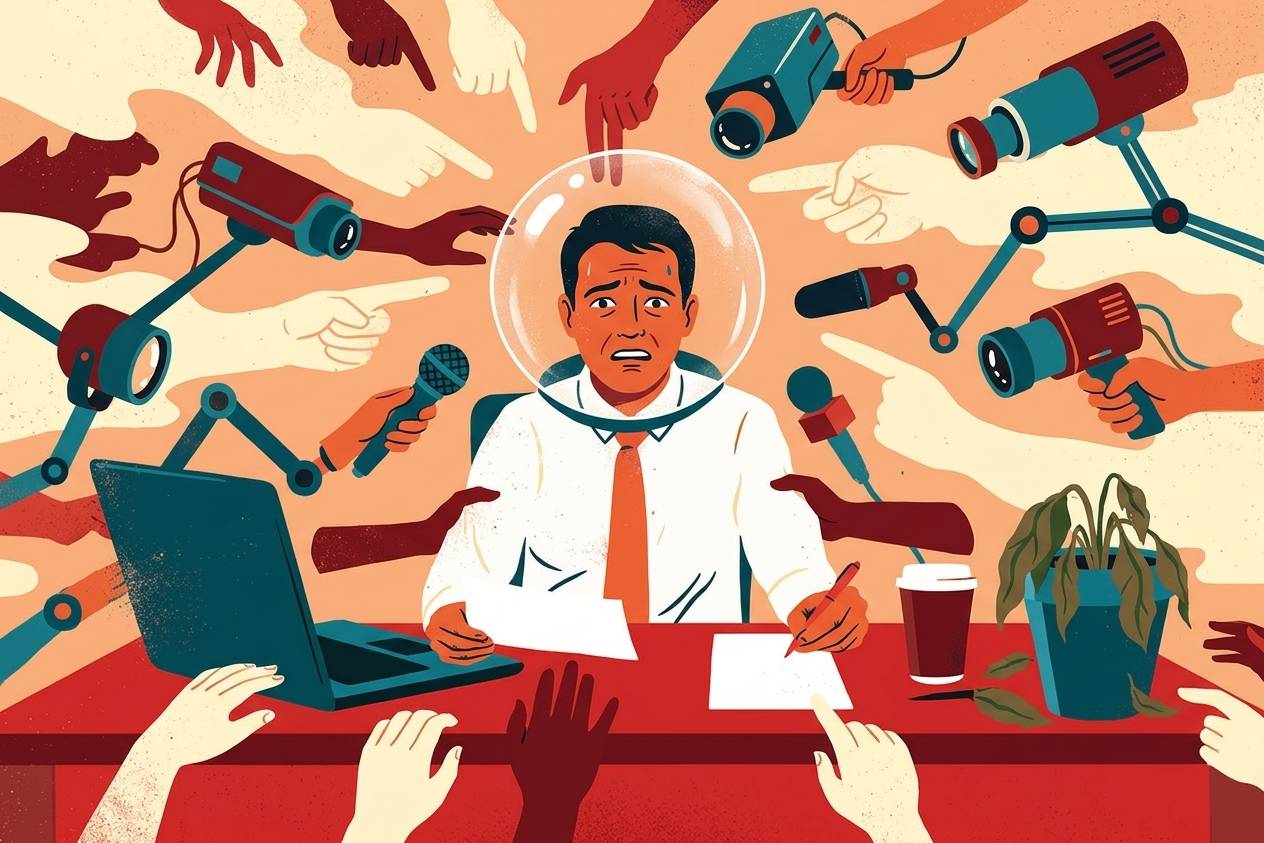
A Psychological Guide to Resilience in High Intensity Roles
Burnout rarely starts on day one. It builds quietly through unclear expectations, chronic overload, lack of control, and sustained pressure without recovery. The difficult part is this: most burnout signals are visible before you accept the job. You just need to know what to look for.
This guide helps you assess burnout risk during the job advert stage, the interview stage, and the decision stage. It also explains the psychology of resilience in high intensity roles so you can separate healthy challenge from long term damage.

What Burnout Actually Is (Psychological Definition)
Burnout is not simply being busy or tired.
Psychologically, burnout involves three core elements:
- Emotional exhaustion
- Cynicism or detachment
- Reduced sense of effectiveness
It develops when demand consistently exceeds capacity over time.
The key word is consistently.
High intensity is not the problem. Sustained imbalance is.
Stage 1: Burnout Signals in the Job Advert
Before you even apply, look for patterns.
High Risk Language Clusters
If multiple of these appear together, risk increases:
- “Fast paced, high pressure environment”
- “Resilient self starter required”
- “Immediate start”
- “Willing to go above and beyond”
- “Thrives under pressure”
- No salary band listed
- Extremely broad responsibilities
One phrase is normal. Five together is informative.
You should cross reference this with:
- A dictionary of common job advert phrases
- A guide to competitive salary meaning
- A list of job advert red flags predicting turnover
- An explanation of fast paced vs high pressure
Clusters predict more than individual words.
Stage 2: Burnout Signals in the Interview
This is where many candidates stop evaluating and start selling themselves.
Instead, treat interviews as data gathering exercises.
Questions That Reveal Burnout Risk
Ask calmly and neutrally:
- What does a typical week look like in hours and workload
- How often do priorities change
- How long was the previous person in the role
- Why did they leave
- What percentage of staff are promoted internally
- What support exists during peak periods
- How is performance feedback delivered
You are looking for clarity, not perfection.
Vague answers signal potential instability.
Stage 3: Psychological Risk Assessment
Now evaluate yourself.
Burnout is not just about environment. It is about fit.
Risk Increases If You:
- Struggle with boundary setting
- Tie self worth to performance
- Avoid asking for help
- Have difficulty saying no
- Overcommit under pressure
- Feel anxious without external validation
Risk Decreases If You:
- Set clear time limits
- Communicate workload constraints early
- Recover properly outside work
- View mistakes as data rather than identity
- Separate job performance from personal value
High intensity roles amplify existing tendencies.
If you overextend naturally, a high demand job accelerates burnout.
Fast Paced vs Burnout
Fast paced does not equal burnout.
Burnout occurs when:
- Pace is high
- Stakes are high
- Support is low
- Control is low
- Recovery time is limited
If even one protective factor is strong, risk drops significantly.
The Five Burnout Predictors to Assess
Research on workplace stress consistently highlights five factors:
1. Workload
Is the volume sustainable relative to staffing?
2. Control
Do you influence how you complete your work?
3. Reward
Is compensation aligned with responsibility?
4. Community
Is the team supportive or competitive?
5. Fairness
Are decisions transparent and consistent?
If three or more feel misaligned, risk increases.
High Intensity Roles That Do Not Burn People Out
Contrary to popular belief, some demanding jobs are highly sustainable.
Common traits:
- Clear expectations
- Strong onboarding
- Honest leadership
- Psychological safety
- Predictable escalation processes
- Transparent targets
Intensity becomes motivating rather than draining.
Warning Signs After Offer Stage
Before accepting:
- Ask for the employment contract early
- Clarify working hours in writing
- Confirm probation expectations
- Ask about overtime policy
- Confirm reporting structure
If responses become defensive at this stage, reconsider.
Healthy employers welcome due diligence.
A Simple Burnout Risk Checklist
Score each from 1 to 5:
- Clarity of role
- Salary transparency
- Team stability
- Support structure
- Leadership openness
- Workload realism
- Your emotional reaction
If your average score is below 3, pause.
Your intuition often detects misalignment before logic does.
A Psychological Guide to Resilience in High Intensity Roles
Resilience is not endurance.
It is adaptability.
True Resilience Includes:
- Boundary clarity
- Cognitive reframing
- Stress recovery rituals
- Social support
- Perspective taking
- Detachment after work hours
Resilience without boundaries becomes self exploitation.
How to Build Protective Habits Before You Start
If you accept a demanding role:
- Define working hour limits early
- Clarify performance metrics in week one
- Schedule recovery time
- Document workload volume
- Build internal allies
- Track wins objectively
High intensity without self management increases risk.
High intensity with structure builds career capital.
Frequently Asked Questions
Can you tell if a job will burn you out before starting?
You cannot predict perfectly, but language patterns, turnover data, and interview clarity significantly reduce uncertainty.
Is burnout always the employer’s fault?
Not always. It is usually a combination of environment and personal boundary patterns.
Should I avoid high pressure roles completely?
No. Many offer rapid growth and strong compensation. The key is structural support and psychological preparedness.
What is the biggest early warning sign?
Repeated emphasis on resilience combined with vague workload details.
Final Thought: Burnout is rarely a surprise.
It is usually the result of patterns visible early: vague expectations, pressure language, high turnover, unclear support.
When you combine linguistic decoding with psychological awareness, you make career decisions from strength rather than hope.